

The calendar flips. Fireworks fade. Someone, somewhere, is already abandoning a gym membership. January has a way of arriving loud and hopeful, then quietly asking what’s actually going to change this time. The rituals are familiar. A new planner. New supplements. Promises made to a future self who, if we’re honest, feels a little imaginary.
But there’s a quieter resolution circulating beneath the usual noise. It doesn’t shout. It doesn’t demand a reinvention. It slips in sideways. Microdosing. Not as a miracle cure or a hustle hack, but as a question whispered into the new year. What if growth didn’t require blowing everything up?
Most resolutions point outward. Do more. Achieve more. Eliminate the parts that feel inconvenient. The body becomes a project, the mind something to optimize. Microdosing approaches change from another angle entirely.
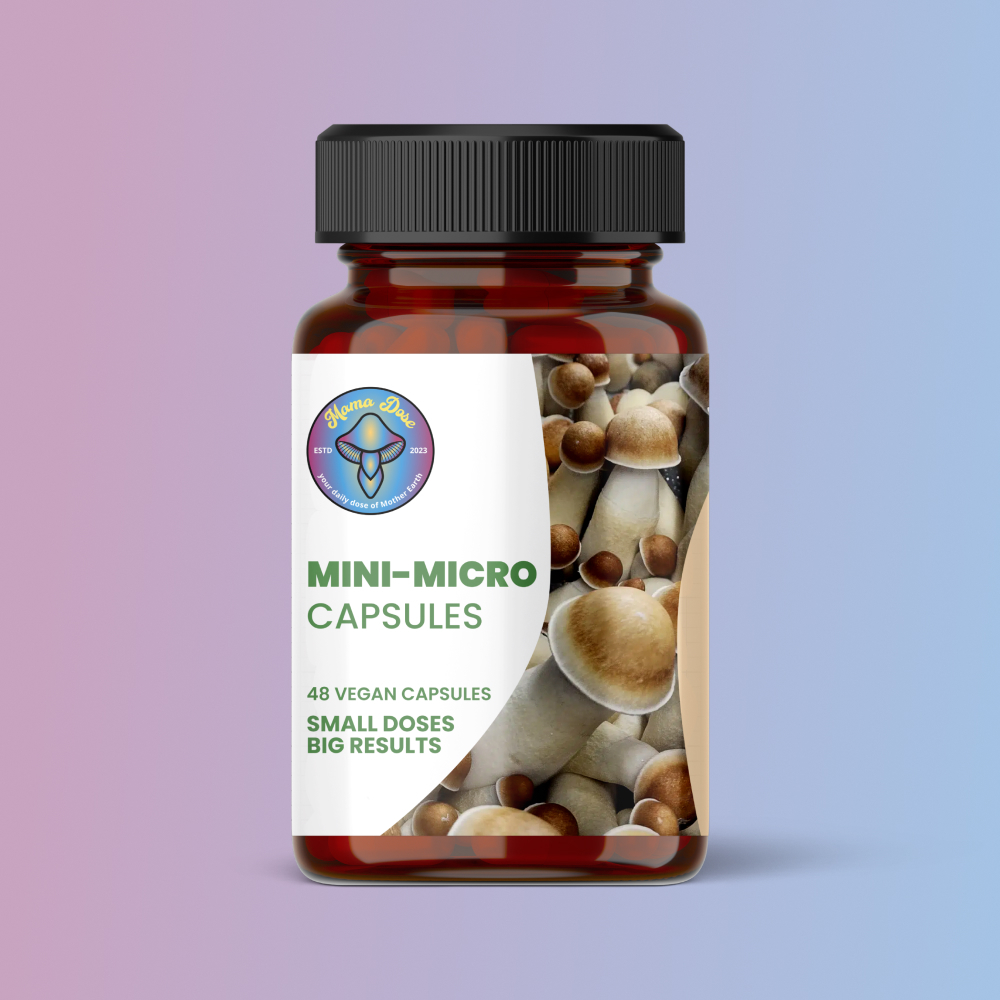
At its simplest, microdosing means taking a sub-perceptual amount of an entheogen, most commonly psilocybin, at levels that don’t produce classic psychedelic effects. No visuals. No grand revelations. Life continues at roughly the same pace. Emails still arrive. Dishes still pile up. The difference, according to those who practice it, lies in how those moments are met.
It’s less about escape and more about attunement. A slight recalibration. Like realizing the room has been too loud for years and someone finally turned the dial down a notch.
Microdosing didn’t emerge from a productivity forum. Long before it became a buzzword, indigenous cultures were already working with plants and fungi in nuanced ways, not always for full ceremonial journeys, but for maintenance, balance, and ongoing relationships.
In the mid-20th century, researchers and psychonauts quietly explored low-dose psychedelics alongside meditation, therapy, and creative work. Then came prohibition, and with it, a long pause. The practice didn’t disappear so much as go underground, carried in fragments, anecdotes, and quiet experimentation.
In the last decade, interest resurfaced. Early studies began examining how low doses might influence mood, neuroplasticity, and cognitive flexibility. Nothing definitive. Plenty of unanswered questions. But enough to reopen the conversation and invite a different relationship with change.
There’s something about the new year that invites reflection without demanding confession. A collective pause. A sense that time itself has taken a breath. Microdosing fits naturally into that liminal space.
For many, the resolution isn’t about becoming happier or more productive. It’s subtler than that. Feeling less numb. Catching the inner monologue before it spirals. Creating space between stimulus and reaction. Microdosing gets framed, imperfectly but honestly, as a way to support those intentions without overwhelming the nervous system.
It’s also slow by design. Unlike detoxes and quick transformations, microdosing unfolds over weeks. Sometimes months. If something shifts, it tends to do so quietly.
This is where many people get it wrong. Microdosing isn’t something to “do harder” in January. Treating it like a performance metric usually backfires.
Instead, it works best when it’s approached as a practice rather than a protocol. A container rather than a command.
The process often starts before the first dose ever enters the body. January is already symbolic, a threshold month that invites intention-setting. Not goals, exactly, but orientations. Less “fix anxiety” and more “get curious about how it shows up.” Less “be more disciplined” and more “notice what drains energy.”
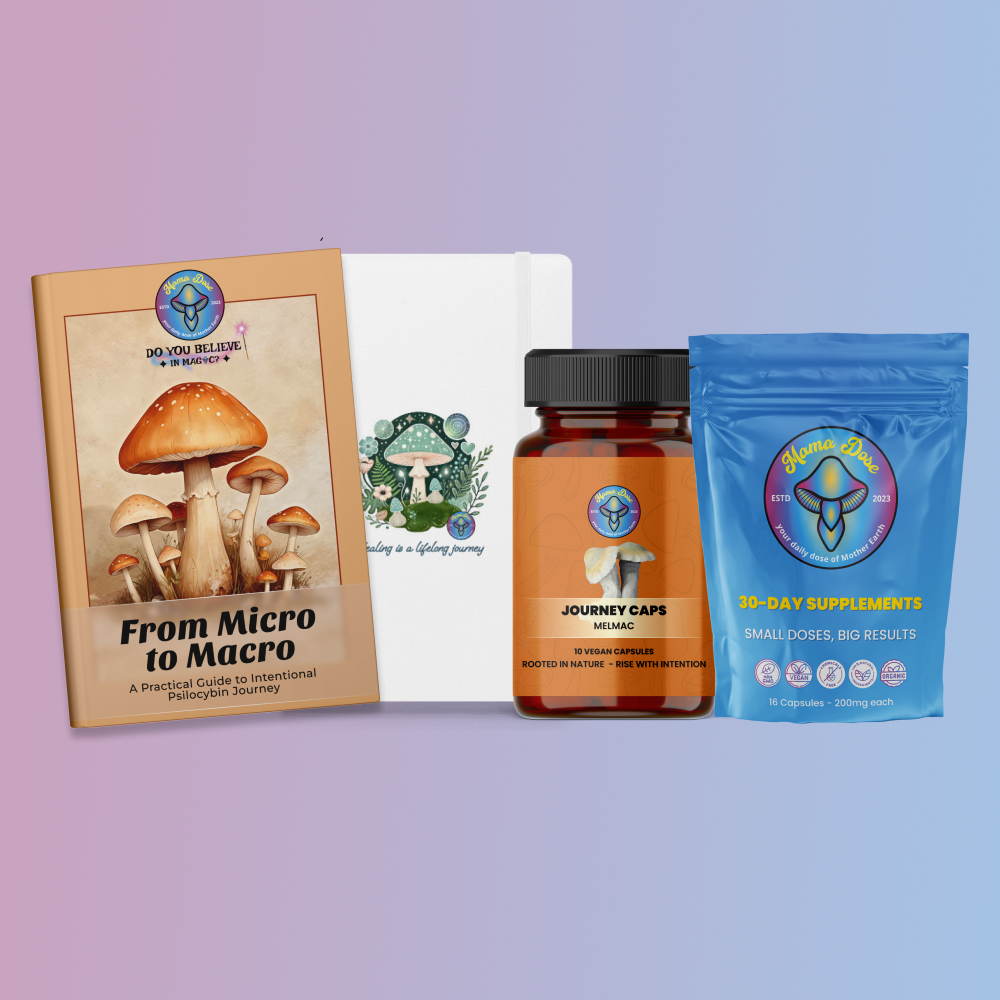
Journaling becomes the anchor. Not polished journaling. Not aesthetic morning pages meant for an audience. Just honest notes. A few lines before the day takes over, or at night when patterns are easier to spot. What feels repetitive lately? What feels unexpectedly alive? What keeps resurfacing?
On microdose days, those questions can land differently. Thoughts may loosen their grip. Emotional material might feel closer to the surface, but less overwhelming. Writing becomes less about solving problems and more about noticing them without flinching.
Many people pair microdosing with simple rituals to ground the practice. Walking the same quiet route. Turning the phone off for an hour. Sitting with a cup of tea and letting the body arrive before engaging with the day. These small gestures signal intention to the nervous system, even if nothing dramatic happens.
Consistency matters more than intensity. Microdosing isn’t about chasing a feeling. It’s about creating conditions where insight can emerge on its own timeline. Skipping days. Adjusting rhythm. Pausing entirely when needed. All of that counts as listening.

Microdosing isn’t universally pleasant. That part rarely trends.
Some people feel nothing at all. Others notice irritability, restlessness, or emotional material rising unexpectedly. Old habits can come into sharper focus, not to punish, but to be seen. That can be uncomfortable.
Microdosing also doesn’t exist in isolation. It interacts with sleep, stress, relationships, and the larger cultural moment. Trying to microdose through burnout without changing anything else is a bit like watering a plant that’s been left in the dark.
Early microdosing narratives leaned heavily on productivity. Write more. Think faster. Optimize everything.
Lately, the tone has shifted. Less output. More alignment.
People talk about listening better. About noticing reactions before they harden into habits. About moments of beauty on walks that used to feel automatic. Small changes. Human ones. Microdosing, framed this way, isn’t about becoming someone else by February. It’s about inhabiting the present with slightly more awareness than before.
What makes microdosing an unusual New Year resolution is that it resists the typical arc. There’s no finish line. No before-and-after reveal. The metric of success isn’t visible.
Some days nothing seems different. Then, quietly, something shifts. A conversation goes more smoothly. A familiar pattern loses its grip. A pause appears where there used to be reflex.
Was it the microdose? The journaling? The intention? Probably all of it. Change is rarely polite enough to announce its cause.
January doesn’t need another demand. Another version of the self to chase. It might need curiosity instead. A willingness to experiment gently and pay attention.
Microdosing, when approached as a practice rather than a promise, offers that. Not answers. Not shortcuts. Just a way of asking better questions and listening long enough for the response to arrive.