Table of Contents
Toggle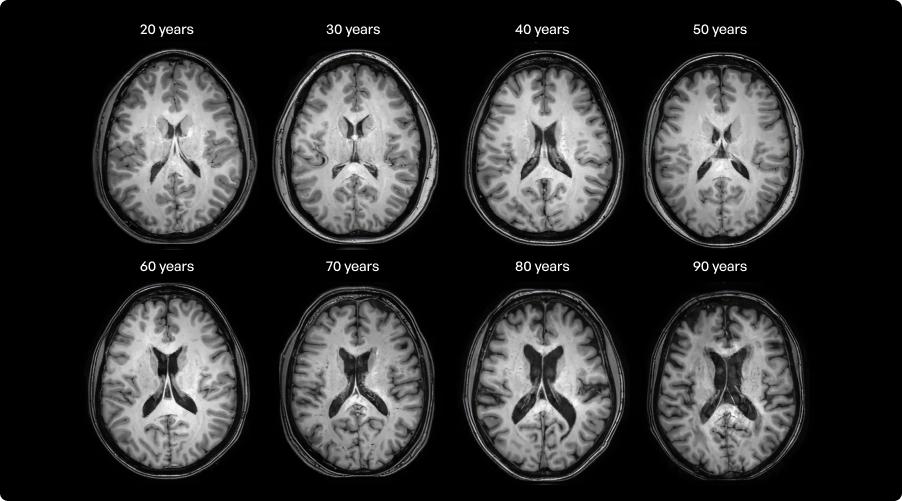
What if an aging brain is more capable of change than we’ve been taught to believe?
A remarkable case report published in Frontiers in Neuroscience this year has opened up a question that would have sounded almost impossible a decade ago: What happens when psilocybin meets a brain in advanced stages of Alzheimer’s disease?
The report describes an octogenarian woman who had lived with Alzheimer’s for approximately ten years. For roughly five years, her functioning had been profoundly diminished. She spoke very little, relied heavily on caregivers, experienced urinary incontinence, had difficulty walking and swallowing, and showed very little spontaneous emotional or social engagement. Just to reiterate- this is close to a reported decade of living in this state.
Then she received psilocybin-containing mushrooms.
The first session involved 5 grams of mushrooms. The acute experience was intense, including profuse sweating, suspected hyperthermia, and a prolonged sleep-like state. But approximately 19 hours later, something unexpected happened: she began spontaneously speaking about autobiographical memories for several hours.
In the days and weeks that followed, her caregivers observed changes across multiple domains. She became more mobile. She began dressing herself. Her urinary continence returned. She became more emotionally expressive and socially engaged. She retrieved contextual memories and initiated conversations.
One month later, because some of these changes had persisted, she received a second supervised session with 3 grams. Her increased verbal expression, emotional responsiveness, humor, and mobility continued to be observed.
It is an extraordinary story.
But it is important to understand what it doesn’t mean.
No not based on this evidence.
This was a single case report, without a control group. The researchers did not demonstrate that amyloid plaques or other underlying Alzheimer’s pathology had been reversed. There was also no advanced neuroimaging or biomarker testing that could definitively establish exactly what was happening inside the brain.
Psilocybin did however- have a signifigant temporary and uncharted impact on a long term dementia patient.
The authors themselves are careful about this. They describe the findings as transient multidomain functional improvement, not a reversal of neurodegeneration.
For the purposes of this exploration-
The question isn’t necessarily, Can psilocybin cure Alzheimer’s?
It may be:
How much capacity can remain inside a brain that appears to have lost so much and can some of that capacity become accessible again? Under what conditions? How might it be sustained or used preventatively if possible?
It goes without saying, Pandora’s box has been opened.
For much of modern neuroscience, the adult brain was viewed as relatively fixed. We now know that isn’t quite true.
The brain is constantly adapting. Connections between neurons can strengthen or weaken. New synaptic connections can form. Networks can reorganize. This capacity for change is known as neuroplasticity.
Psilocybin has become particularly interesting in this area because preclinical research suggests that psychedelics can promote structural changes in neurons, including increased dendritic branching and the formation and strengthening of synapses. These effects appear to involve several other pathways and receptors in the brain.
One of the most compelling discoveries has been that psilocybin appears to dramatically alter how existing brain networks communicate.
In a landmark 2024 Nature study, researchers used intensive MRI mapping to observe the brains of healthy adults before, during, and after a high dose of psilocybin. The researchers found widespread disruption of normal patterns of functional connectivity.. if I’m losing you here stay with me!
Essentially, the brain became temporarily less rigid in the way its networks communicated. Distinctions between normally separate networks became less pronounced.
Think of the brain as an orchestra.
With age, stress, trauma, or disease, certain sections may become quieter, less coordinated, or overly rigid in their patterns. Psilocybin doesn’t simply turn the volume up. It appears to temporarily change the way the orchestra communicates.
That may be one reason researchers are so interested in its potential relationship with neuroplasticity.
In 2026, researchers at UC Berkeley launched the PLASTICITY study, specifically examining how psilocybin affects healthy adults between the ages of 60 and 85. Researchers are using MRI and cognitive testing to investigate memory, emotion, perception, brain structure and function, and potential markers of neuroplasticity.
Another important piece of the puzzle arrived just this summer.
A 2026 human study used PET imaging to look directly at synaptic density after psilocybin. Interestingly, researchers did not find a statistically significant overall increase in synaptic density one week after dosing. However, participants who experienced psilocybin in a more therapeutic setting showed stronger mystical-type experiences, longer-lasting psychological benefits, and greater increases in synaptic density than those dosed inside an MRI scanner.
In other words, the story may be more complicated than simply “psilocybin creates more synapses.” (potentially more on this soon) but for now lets sum it up by saying-
Context matters. Experience matters. The environment matters. And the human brain is extraordinarily complex.
The Alzheimer’s case report isn’t happening in isolation.
Researchers are now investigating whether psilocybin might have relevance to cognitive aging and neurodegenerative disease through several possible pathways including neuroplasticity, inflammation, synaptic preservation, and changes in brain network function.
In a 2025 mouse model of familial Alzheimer’s disease, monthly psilocybin treatment was associated with better performance on several cognitive tasks, reduced markers of chronic neuroinflammation, increased hippocampal neurogenesis, and preservation of synaptic signaling. Interestingly, the treatment did not reduce amyloid-beta plaques.
That distinction is important.
It suggests that improving brain function may not necessarily require removing every underlying marker of disease. There may be other ways of supporting the brain—by influencing how its surviving cells communicate, adapt, and compensate.
We don’t yet know whether that translates to humans.
But researchers are beginning to ask the question.
There is also a fascinating, much earlier line of research looking at psilocybin and biological aging itself.
In 2025, researchers reported that psilocin—the active metabolite of psilocybin—extended the lifespan of human cells in culture. In aged mice, repeated psilocybin treatment was associated with improved survival.
This is not evidence that psilocybin makes humans live longer. These were cellular and animal experiments, and human longevity has not been demonstrated.
But taken alongside the emerging research on neuroplasticity, synapses, inflammation, brain networks, and cognition, it contributes to a much bigger scientific question:
Can the aging brain remain more flexible than we assume?
The woman in this case report did not suddenly become young again.
Her Alzheimer’s disease did not disappear.
What changed, at least temporarily, was her access to herself.
Memory. Movement. Humor. Conversation. Emotional connection. Autonomy.
That is what makes the story so profound.
Perhaps the future of psychedelic research isn’t simply about treating a list of symptoms. Perhaps it is about understanding the relationship between disease and possibility—about discovering how much function can remain beneath the surface, even when conventional measures suggest that so much has been lost.
We are still very early in this research. A single case cannot establish a treatment. Animal studies don’t automatically translate to humans. And psilocybin is not currently an established treatment for Alzheimer’s disease.
But science advances by asking better questions.
And one of the most intriguing questions emerging now is this:
How much of the aging brain is truly gone—and how much might simply be waiting for a different way to communicate?
Maybe the aging brain isn’t a story of inevitable disappearance, in some cases, it is also a story of possibility.
Rewards
Invite your friends and earn a discount on your next purchase. Your friend also earns a discount! Get started now, by sharing your referral link with your friends.
This item is currently out of stock!
By adding it to your cart, you confirm a backorder purchase, and we will ship it as soon as it becomes available.