The Alchemy of Stacking: Functional Mushrooms and Botanical Allies
Exploring how functional mushrooms and botanical allies are combined in wellness routines, and how those practices differ from psilocybin stacking.
As we’ve explored in the last several pieces, nature rarely works in isolation. Within a forest, plants, fungi, and microorganisms exist in intricate relationships, each contributing something unique to the larger ecosystem. Traditional herbalism has long embraced this interconnectedness, bringing plants and fungi together for their complementary qualities.
Today, this philosophy is finding its way into wellness through a practice known as mushroom stacking.
What is mushroom stacking?
Mushroom stacking means combining different mushrooms, botanicals, or other compounds with the intention of exploring how their properties might complement one another. In a wellness routine, that could mean using a functional mushroom blend or pairing a mushroom with a botanical such as cacao or tulsi. The term also comes up in conversations about psilocybin, where the effects and interactions raise a different set of questions.
But what happens when we bring these different allies together? And how much do we know about whether their properties complement one another?
Stacking functional mushrooms

Each functional mushroom contains a distinct mix of naturally occurring compounds, including beta-glucans, a type of polysaccharide. Researchers are studying how these compounds interact with the body. The Mama Dose Functionals article on the body’s inner ecosystem explores why these mushrooms are often discussed in the context of whole-body wellness.
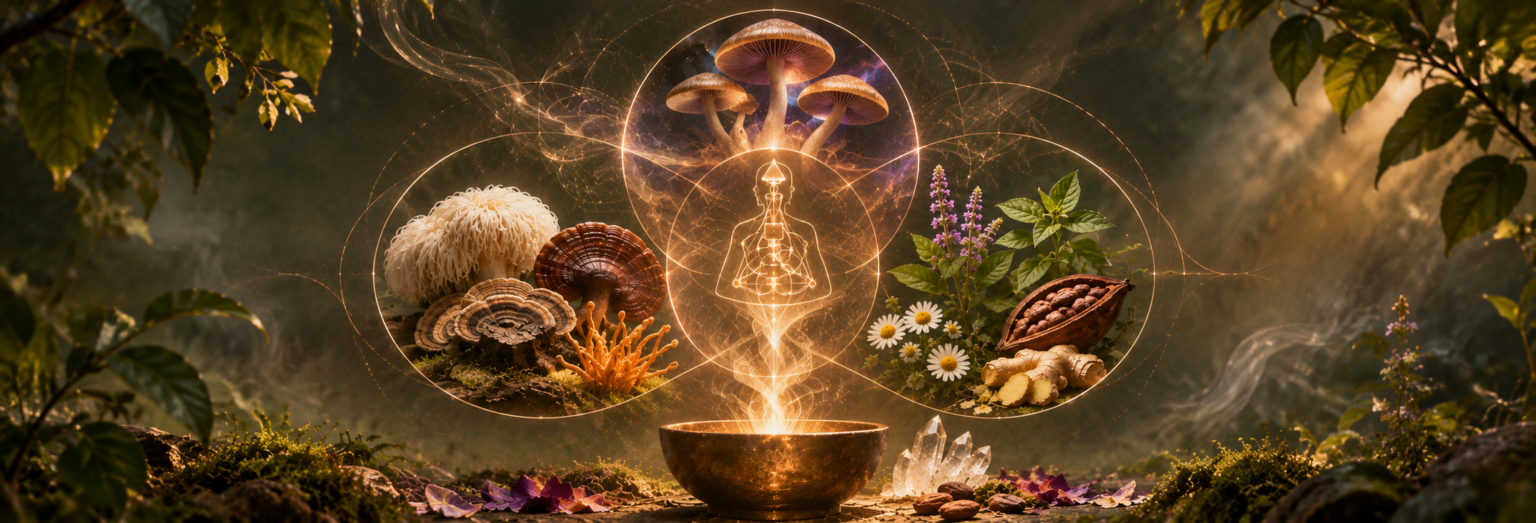
At Mama Dose Functionals, our collection features five mushrooms: lion’s mane, cordyceps, reishi, turkey tail, and chaga. Combining functional mushrooms is one way people explore several areas of wellness in the same routine.
- Lion’s mane and cordyceps bring together a mushroom studied for its potential effects on cognition and one often associated with physical vitality.
- Reishi and turkey tail pair mushrooms often discussed in relation to rest and immune wellness, respectively.
- Lion’s mane and reishi are another pairing people consider when they’re interested in both cognitive wellness and an evening wind-down routine.
Those associations help explain why people are curious about the pairings. They don’t establish that a blend offers greater benefits than its individual ingredients. Our article on what lion’s mane does in the brain takes a closer look at the early research and the mixed results from small human studies.
Beyond functional fungi: Stacking with botanical allies

Botanical allies bring another layer to mushroom stacking. Some pairings draw on traditional uses. Others start with something as simple as how two ingredients taste together.
- Lion’s mane and cacao. Cacao brings a rich flavor to mushroom drinks and naturally contains theobromine and flavanols.
- Reishi and tulsi. Also known as holy basil, tulsi has a long history in herbal traditions and brings an aromatic note to a blend.
- Ginger and functional mushrooms. Ginger adds warmth and a little bite to mushroom teas and other preparations.
- Chamomile and reishi. Chamomile’s mild, floral flavor makes it a natural fit for an evening tea.
These combinations offer different ways to bring mushrooms and botanicals into conversation, whether through herbal infusions or an everyday wellness ritual. When the conversation turns to psilocybin, questions about how the ingredients interact become especially important.
Functional mushrooms vs. psilocybin mushrooms

Functional mushrooms and psilocybin-containing mushrooms belong to the same fungal kingdom, but they contain different compounds and are studied for different reasons. Our guide to how mushroom species differ explains why the species matters when you’re talking about effects.
Microdosing
Psilocybin microdosing is generally intended to produce subtle effects. People report exploring it for reasons such as creativity, focus, or emotional awareness, but controlled studies on those outcomes have produced mixed findings. In one double-blind, placebo-controlled study of psilocybin microdosing, researchers found no evidence of improved cognition, creativity, or well-being under the conditions they tested.
Lion’s mane often comes up in these conversations because researchers are studying some of its compounds in relation to nerve growth factor. That research concerns lion’s mane itself. Whether combining it with psilocybin changes the experience or offers additional benefits remains an open question.
Macrodosing
Macrodosing refers to a higher-dose psychedelic experience that can involve pronounced shifts in perception and emotion. For me, the more interesting conversation here is about preparation and how we make sense of an experience afterward.
The ordinary rhythms of life matter here, too. Rest, reflection, and conversations with people we trust can give us space to think about what an experience brought up. Our piece on psychedelic integration as an ongoing practice explores how that reflection can unfold over time.
The importance of intention and discernment
It’s easy to assume that more ingredients will bring more benefits. But when several things change at once, it gets harder to tell what’s contributing to what you notice. The ingredients, product quality, medications, and individual responses all matter.
- Know your ingredients. Look for the mushroom species, the full ingredient list, and information about how the product was made.
- Start with familiarity. Introducing several unfamiliar supplements at once makes it harder to tell how you respond to each one.
- Consider interactions. Herbal supplements can interact with medications. If you take prescription or over-the-counter medications, a pharmacist or clinician can review the ingredients with you. NCCIH
- Look for quality information. Check whether the manufacturer identifies the species, explains its extraction method, and makes third-party testing information available.
The bigger picture: Working with nature
In my opinion, the most interesting aspect of stacking isn’t simply the possibility of enhanced effects, but the philosophy behind it. The alchemy of stacking isn’t simply about combining ingredients. It’s about understanding their individual qualities, exploring their relationships, and developing a more intentional connection with the natural world.
Nature operates through relationships. A forest is not merely a collection of individual trees; it is an interconnected ecosystem of plants, fungi, and microorganisms continuously influencing one another.
When we can bring that same perspective into our relationship with natural medicine a profound shift takes place.
Functional mushrooms, psychedelic mushrooms, and botanical allies each offer distinct histories, properties, and possibilities. Some combinations have promising biological foundations, while others remain areas of curiosity awaiting further research and explorations. Wishing you all wonderful findings on your explorations, and we warmly welcome you to share what comes up in your stacking alchemy journeys within the Mamadose Community.