Not medical advice. This article is educational. Psilocybin is not a treatment for any medical condition, and nothing here is a substitute for care from a qualified health professional. If you take prescription psychiatric medication, do not stop or change it without talking to your prescriber.
Microdosing for mental health describes taking sub-perceptual doses of psilocybin, typically a fraction of a full dose, as part of a broader practice rather than as a standalone treatment. People who approach it this way generally are not trying to eliminate anxiety or low mood. They are trying to create enough distance from automatic patterns to notice them. The sections below cover what that shift looks like, why it is happening now, and what the research does and does not yet support.
Something strange and beautiful is happening.
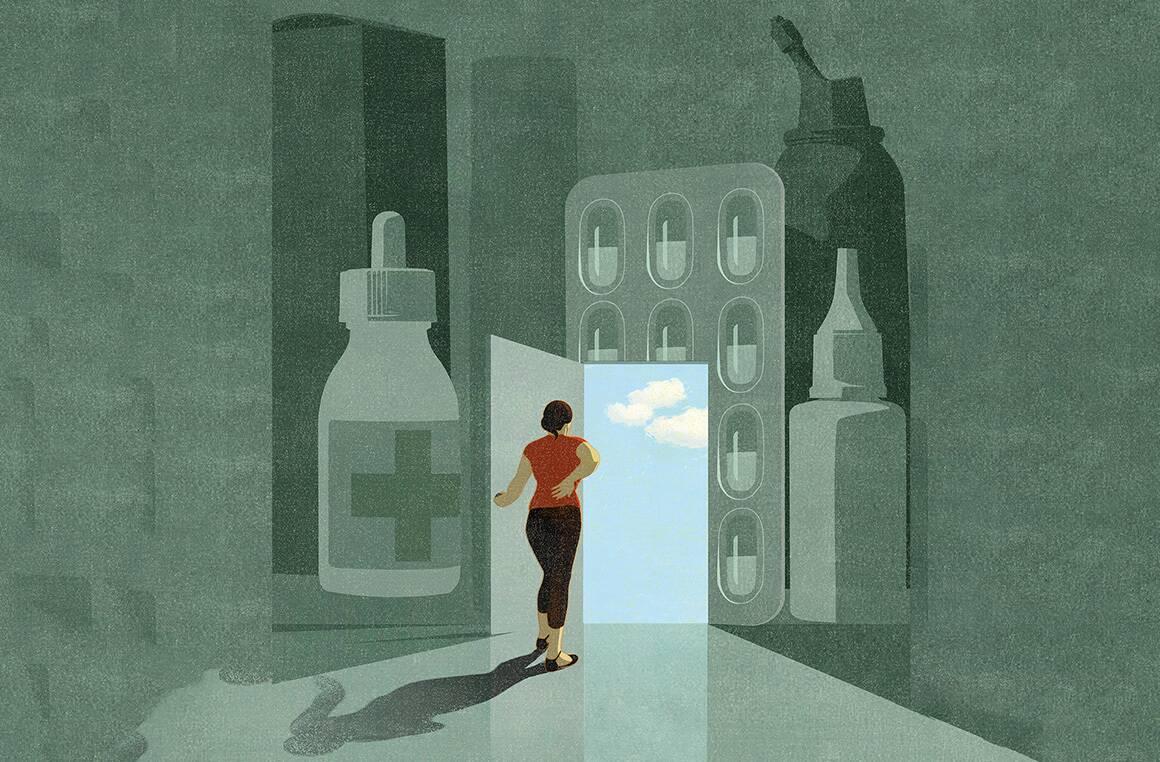
For decades, the answer to mental health has largely lived behind a prescription counter. Feel anxious? Here’s a pill. Depressed? Here’s another. Can’t sleep? We have something for that too. We are a culture that has become remarkably adept at managing symptoms, yet millions of people still wake up feeling disconnected from themselves, their relationships, and their lives.
So people have started looking elsewhere.
Asking questions that our current western medicine model was never designed to answer on its own.
Why do I feel this way?
What happened to me?
Who am I underneath the anxiety, the grief, the perfectionism, the constant need to perform and what this society demands of me?
That shift may be one of the biggest mental health revolutions of our lifetime.
And my friends it’s with a hopeful heart and knowing grin I tell you that it’s not happening inside pharmacies.
It’s happening in meditation circles, breathwork studios, psychedelic experiences, trauma therapy offices, forests, community gatherings, and around dinner tables where some brave souls are daring to have conversations their families avoided for generations.
For years, mental health was largely approached through diagnosis.
Today, more people are beginning with curiosity.
Instead of viewing anxiety or depression as something to eliminate (symptom), they’re asking whether these experiences might actually be signals (origin).
Messages from a nervous system that has spent years adapting to stress, trauma, loneliness, or environments that demanded survival over authenticity.
This isn’t to say that suffering is “all in your head.”
It means our emotional lives are often more intelligent than we’ve given them credit for.
What if the symptoms we look upon in fear, resentment and disdain are in all actuality the intelligence of our bodies and souls gifting us with clues and messages as to what must be changed.
One of the quietest but most profound shifts is this:
People no longer want someone else to “fix them”.
They want to understand themselves.
That may sound subtle, but it’s an entirely different philosophy.
Instead of outsourcing healing, people are learning practices that invite them into relationships with their own minds and bodies.
None of these claim to be magic.
But together, they reflect something important: healing like life is becoming something we participate in, not simply something that happens to us.
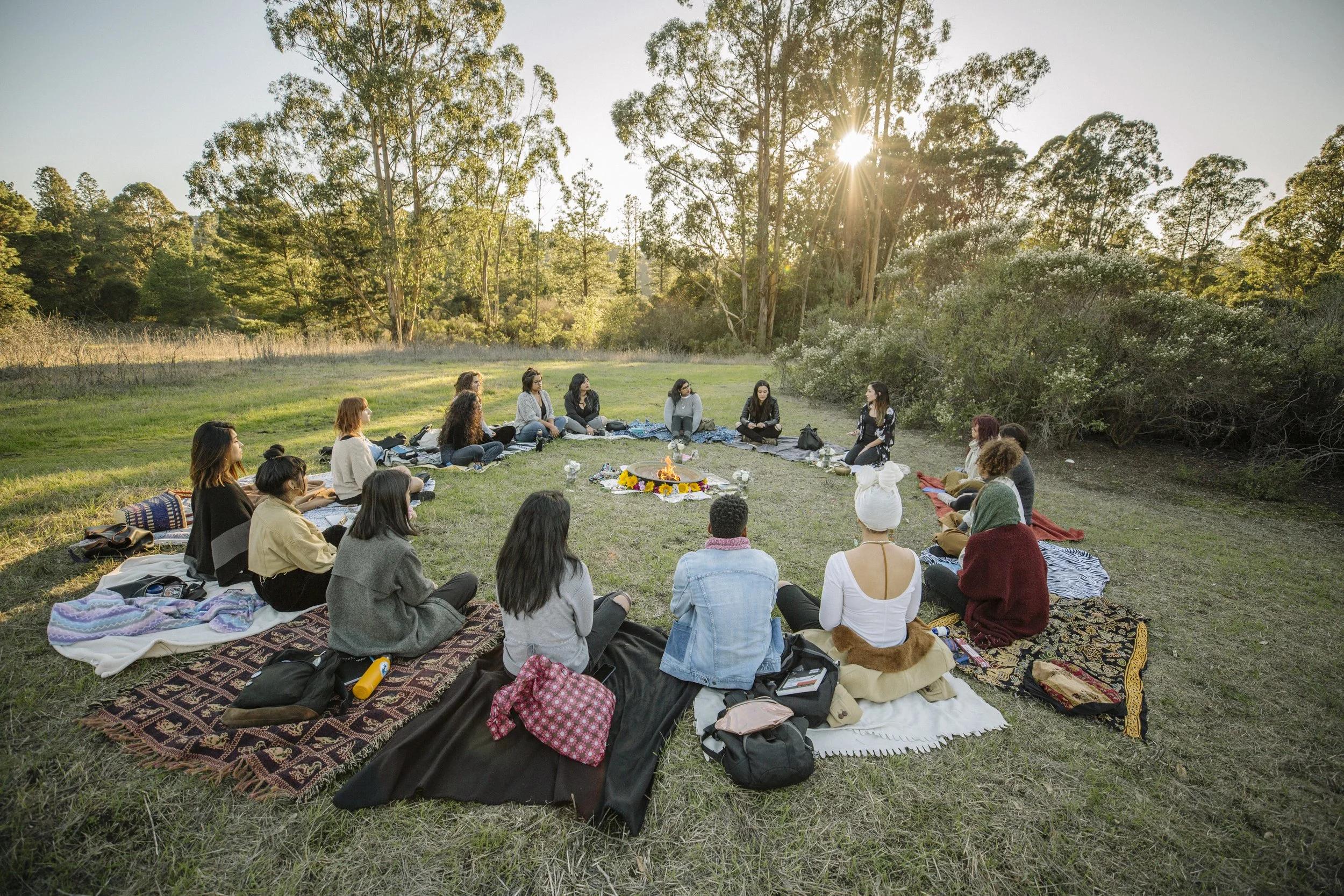
Modern mental health has often been an individual pursuit.
An appointment.
A prescription.
A diagnosis.
Yet humans evolved in tribes, families, rituals, and communities.
More people are realizing that loneliness isn’t simply an emotion rather an environment.
And no amount of self-optimization fully replaces genuine belonging.
That’s why we’re seeing a resurgence of community-based healing spaces.
One of the most powerful elements and recognitions of a healing process is realizing how many others are also carrying and working through the same things.
One of the most interesting developments in mental health isn’t that more people are talking about psilocybin. It’s how they’re talking about it.
For years, the conversation centered around heroic doses and profound mystical experiences. While those experiences certainly have their place and are excellent ways to shift out of life dynamics we can find ourselves at play of for far too long, the wave of microdosing brings a different kind of opportunity.
Many people describe microdosing as creating just enough space to notice patterns that previously ran on autopilot. The reactive conversation. The anxious thought loop. The emotional numbness. The tendency to live life on unconscious repeat.
The mushroom isn’t doing the work for anyone. Instead it’s creating conditions where the work needed becomes easier to identify.
That’s a vastly different relationship to mental health than simply trying to suppress symptoms.
If you are new to the practice and want to understand how dose sizes are actually defined, our psilocybin dosage guide breaks down each range and what separates a sub-perceptual dose from a full one.
Two different bodies of evidence often get blurred together, and the distinction matters.
Full-dose psilocybin has strong clinical trial support. Randomized controlled trials published in JAMA Psychiatry (Davis et al., 2020) and the New England Journal of Medicine (Carhart-Harris et al., 2021) found meaningful reductions in depressive symptoms when a full dose was given alongside structured psychological support. These were supervised clinical settings with trained facilitators, not self-directed use.
Microdosing specifically has a weaker evidence base. Survey and observational studies consistently report benefits, but people in those studies knew what they were taking. When researchers have run placebo-controlled trials, including a large self-blinding study published in eLife (Szigeti et al., 2021), improvements in the microdose group were largely matched by improvements in the placebo group. That points toward expectancy as a significant driver.
Neither finding cancels the other out. What it means is that the confident claims you may encounter about microdosing and mental health are running ahead of the controlled evidence, and honest engagement with the practice includes saying so.
One reason microdosing has captured so much attention is because it shifts the conversation from fixing a “broken brain” to cultivating a more adaptable one.
Here is the part where I bring up neuroplasticity (again). The brain’s impressive ability to reorganize, learn, and form new pathways. While the science around microdosing is still evolving, many people are drawn to the possibility that change doesn’t always require forcing ourselves to think differently. Sometimes it begins by becoming more capable of thinking differently.
Mental health may have less to do with never feeling anxious, sad, or overwhelmed.
And more to do with regaining the flexibility to respond rather than simply react.
We have written more on what happens to habitual thought patterns under psilocybin in psilocybin, the inner critic, and the default mode network.
What’s unfolding isn’t simply the rise of microdosing.
It’s the rise of people who want to be active participants in their healing rather than passive recipients of it.
This expands the conversation in a way which makes it known that no capsule whether pharmaceutical or psychedelic can replace the daily work of presence, agency and personal willingness.
The conversations we avoid.
The habits we repeat.
The relationships we cultivate.
The stories we continue to tell ourselves.
Microdosing, at its best, isn’t an escape from that work.
For many, it’s an invitation into it.
Maybe that is exactly why this movement feels different.
Rather than asking us to believe in another miracle, it’s asking us to become more engaged in our own healing.
If the community piece is what’s calling you, that’s where the Golden Teachers microdosing guide and the Mama Dose community both pick up the thread.
Microdosing for mental health means taking a sub-perceptual dose of psilocybin, small enough that it does not produce noticeable psychedelic effects, as part of a wider set of practices such as journaling, therapy, or community support. It is not a treatment for any diagnosed condition.
The controlled evidence does not currently support that claim. Observational and survey studies report benefits, but placebo-controlled trials have generally found that the microdose group and the placebo group improve by similar amounts. Full-dose psilocybin given with psychological support has stronger clinical trial evidence, but that is a different practice in a supervised setting.
This is a question for your prescriber, not for the internet. Interactions between psilocybin and psychiatric medication are real and depend on the specific drug. Do not stop or adjust prescribed medication on your own.
A microdose is sub-perceptual, meaning ordinary functioning is intended to stay intact. A full dose produces marked changes in perception and thought and calls for preparation, a safe setting, and ideally support. Our psilocybin dosage guide lays out the ranges.
No. Nearly every account of a practice that helped describes it working alongside something else, therapy, community, somatic work, or sustained personal effort. The article above makes the same point: the substance is not doing the work.
Written by Wolfie.
Last updated: August 20, 2026.
Mama Dose publishes educational content about psilocybin and wellness practices. This article is not medical advice and has not been reviewed by a licensed medical professional.
Rewards